Coffee roast levels can turn a bright, fruit-like cup into a deeper, roast-forward one, even when the beans and brewing choices are familiar. If you are deciding what to buy, roast level gives you one useful clue about the cup, not a guarantee of exactly how it will taste.
Roasting influences flavor, aroma, acidity, and body, alongside the bean itself and the way you brew it. Your own taste is a sound reason to choose one style over another. Understanding how roasting changes the bean makes those differences easier to recognize.
Key Takeaways
- Roast level is one influence on a cup.
- Bean and brew choices matter, too.
- Labels describe tendencies, not guarantees.
- Your taste is a useful guide.
- Compare cups using the same recipe.
What Happens as Coffee Beans Roast?
A green coffee bean changes color and structure as heat is applied. First crack is the audible popping stage when heated beans expand and release moisture and gas.
Roast time and temperature readings make sense only in the context of the roaster and batch. Minutes alone do not tell you whether a roast is well developed or suited to a particular taste.
Roast time and temperature readings depend on the roaster and batch, so neither gives a universal quality test.
As heat moves through the batch, beans shift from green to yellow and then brown. Continued roasting deepens roast character and can eventually bring a second popping stage, called second crack.
From Green Beans to First Crack
Roasting starts with green beans that are dense and relatively moist. Their color changes as water leaves and heat drives chemical changes that create the aromas associated with roasted coffee.
The early sequence is useful to recognize, even though roasters control it differently. These four stages describe broad changes, not a fixed schedule for every batch:
- Green beans enter the heated roaster.
- Yellowing begins as moisture leaves.
- Beans brown as roasting continues.
- First crack brings audible pops.
Are There Four Types of Coffee Roast?
There is no universal four-type classification. Common labels include light, medium, and dark, while some roasters also use intermediate names such as medium-light and medium-dark.
A label helps you compare a roaster’s offerings, but names can vary between businesses. Color and sensory notes give you more context than assuming every seller divides roast levels in the same way.
Is There a Set Medium Roast Coffee Temperature?
No single temperature reliably marks a medium roast across all machines. Probe calibration, probe location, and conditions inside the roaster can all change the displayed reading.
Roast duration has no single correct number of minutes. It depends on the machine, gas pressure, and batch size, including how the batch size relates to burner output. A small batch and a large batch can respond differently to the same heat setting.
Use time and temperature as information about a particular roast, rather than stand-alone measures of quality. From these changes in the roaster, the next useful question is what people notice in the finished cup.
Coffee Roast Levels Explained: How Do Light, Medium, and Dark Compare?
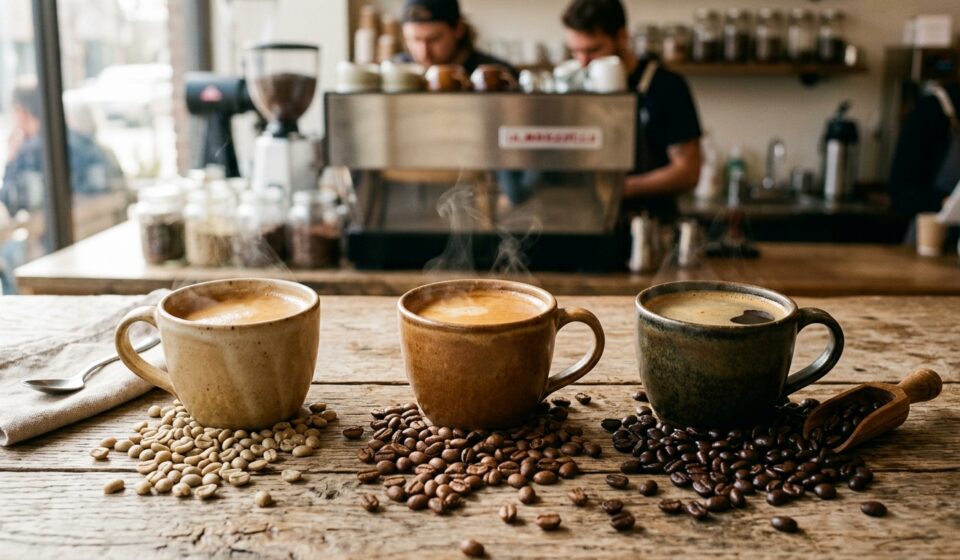
A light roast and a dark roast can taste markedly different even when brewed from the same kind of coffee bean. Roast level affects the balance between origin character and the flavors created during roasting.
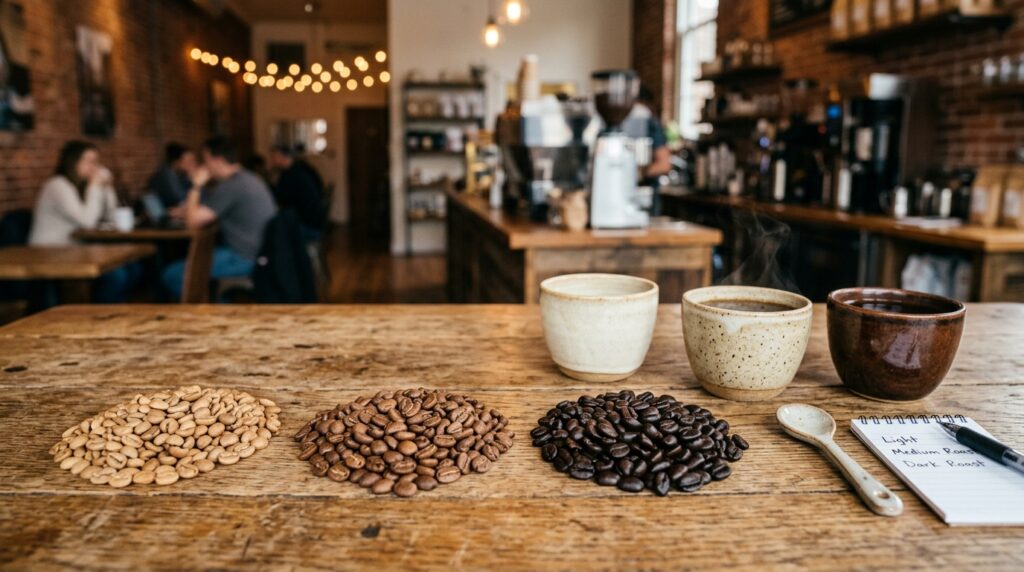
Light, medium, and dark describe common tendencies, not guaranteed flavors. A bean’s variety, growing conditions, and processing also shape its cup, so two coffees with the same label can still differ.
| Roast level | Typical appearance | Common flavor and body | What the roast tends to emphasize |
|---|---|---|---|
| Light | Light brown, usually dry surface | Brighter perceived acidity, floral or fruit notes, lighter body | Bean origin character and delicate aromas |
| Medium | Medium brown, usually dry surface | Balanced acidity and sweetness, caramel, nut, or chocolate notes | Both the bean’s character and roast development |
| Dark | Dark brown, sometimes oily-looking | Lower perceived acidity, fuller body, smoky or bittersweet notes | Roast character, which can mask more origin character |
Acidity in coffee means a lively, sharp quality, not necessarily a sour taste. If a cup tastes unpleasantly sour, roast level is only one possible factor; the bean and brewing choices matter as well.
Light roast coffee can make a bean’s origin character easier to notice because the roast tends to contribute less dominant flavor. That is a tendency, not a promise. Some coffees have subtle origin notes even when roasted lightly.
A dark, sometimes oily-looking surface is not a reliable sign of quality. Surface oil can appear with darker roasting, but it does not tell you whether the beans taste balanced or suit your preferences.
Use the contrast in the cup, rather than a roast name alone, as the starting point for considering caffeine and health.
Does Roast Level Change Caffeine or Health Effects?
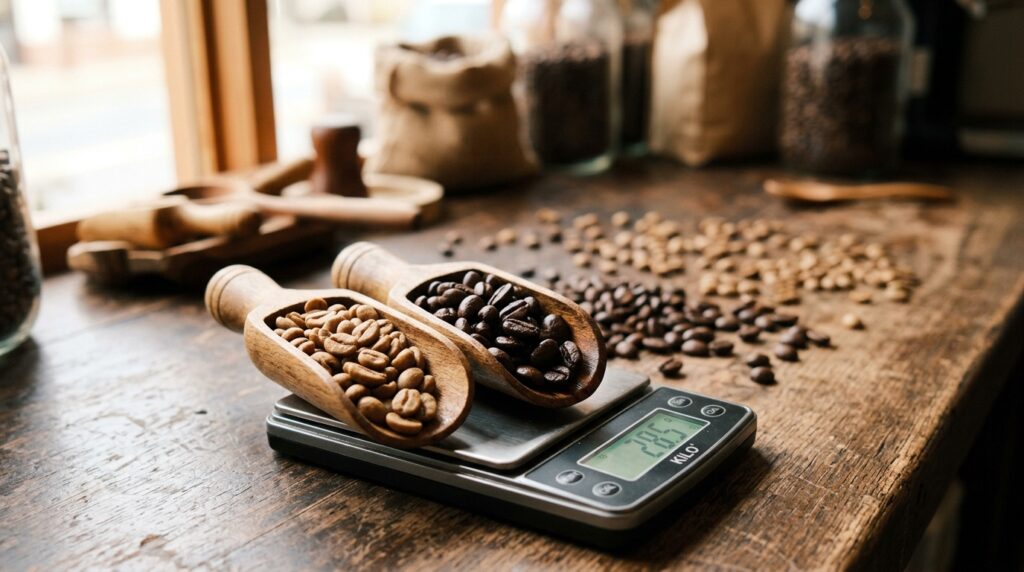
Weighing the beans gives a fairer light-versus-dark caffeine comparison than using the same scoop. By weight, light and dark roasted beans contain broadly similar amounts of caffeine.
A scoop by volume may hold slightly more light-roast coffee because those beans are denser. The amount in a brewed cup also depends on the serving and recipe, so roast color alone cannot predict the result.
| How coffee is measured | Light roast | Dark roast | Practical takeaway |
|---|---|---|---|
| By weight | Broadly similar caffeine per weight of beans | Broadly similar caffeine per weight of beans | Compare equal bean weights; bean type and serving still matter |
| By volume | A scoop may hold slightly more dense beans | A scoop may hold slightly fewer, less dense beans | Equal scoops are not equal bean weights |
| In the brewed cup | Amount varies with dose, recipe, and extraction | Amount varies with dose, recipe, and extraction | Serving size and brewing choices affect the cup |
The answer to “which roast coffee is best for health?” is that no roast level is universally best on its own. A drink’s serving size and additions such as sugar or cream also affect what you consume.
Individual responses to caffeine differ, too. If caffeine affects your sleep or makes you feel uncomfortable, the amount you drink and when you drink it matter more than choosing a roast by color alone.
A kitchen scale can make comparisons more consistent than a scoop, especially when you are testing a new coffee. Keep the dose steady and change only the beans if you want to notice differences in flavor and strength.
Once caffeine is put in context, you can match roast character to personal taste and brewing style.
Which Roast Fits Your Taste and Brewing Method?
If you prefer a cup that tastes bright and fruit-forward, a light roast is a reasonable first one to try. Personal preference should guide the choice, since the same roast can taste different across beans and recipes.
Match the roast to the flavors you enjoy, then adjust your recipe to the coffee. A brewing method can help bring out certain qualities, but no method belongs to just one roast level.
Match the Flavor to Your Preference
Try a light roast if bright, fruit-forward flavors appeal to you. A medium roast is a sensible starting point when you want balanced sweetness. If bold, smoky, or bittersweet notes sound better, try a dark roast.
These are starting points, not rules. A coffee roaster can tell you about a bean’s flavor notes and roast style, which gives you more useful detail than a roast label alone.
Choose a Roast That Works With Your Brew
Pour-over is a common way to notice lighter-roast character. Drip coffee and French press are flexible starting points for medium roasts, while espresso and French press can work well with darker roasts.
Those pairings are options, not limits. You can brew light coffee as espresso or use dark coffee in a drip machine. Your recipe and the beans will shape the result alongside the method.
When you change beans, the grind size or recipe may need adjustment. A finer or coarser grind changes how quickly water moves through the coffee, so keep notes if a new cup tastes too weak or too intense.
For a practical first test, ask a coffee roaster what flavors to expect from the beans and how the roast is described. Then make a small, controlled tasting at home to see whether the suggested match fits your own palate.
How Can You Test and Keep Coffee Beans Fresh?
Two coffees are easier to compare when everything about the brew except the beans stays the same. Change one variable at a time to separate roast preference from brewing differences.
Hold the method and recipe constant, then taste both cups close together. A side-by-side test makes it easier to notice which coffee’s acidity, sweetness, body, and finish you prefer.
Keep the brewing method and recipe steady, and change only the beans when you compare roasts.
Use this four-step tasting to compare two roasts without changing several things at once:
- Choose two coffees with different roast levels.
- Keep the brewing method and recipe constant.
- Taste both cups close together.
- Record which acidity, sweetness, body, and finish appeal.
Compare Two Roasts Fairly
Use the same brewer, water, coffee dose, and grind setting for both cups at first. If one cup seems less balanced, a later test can adjust one brewing variable while keeping the other details steady.
Check the roast date when buying beans, and choose whole beans when practical. Ground coffee has more exposed surface, so its aroma can fade faster after grinding.
Protect the Beans’ Aroma
Store beans in an airtight, opaque container in a cool, dry place. Grind shortly before brewing, and avoid routine exposure to heat, light, air, and moisture.
Coffee flavor fades over time, but the pace depends on packaging and storage. A bag’s seal, the conditions in your kitchen, and how often you open the container all affect how well aroma lasts.
Buying smaller amounts can help you use beans while their flavor is still appealing, especially if you brew only occasionally. Keep the roast date visible and close the container promptly after taking out what you need.
A repeatable tasting habit helps you identify the flavor you chose, while a steady storage routine helps preserve it.
Conclusion
No roast level is best for every coffee drinker. Light, medium, and dark describe useful tendencies, not guarantees about every bean or cup.
Your taste matters, and brewing choices shape the flavor you experience. A label can narrow your options, but a careful tasting offers better evidence about what you enjoy.
Choose two different roast levels and brew them with the same recipe. Compare the cups side by side, then trust your own tasting over a label alone.
FAQ
Do different roasts have different levels of caffeine?
What is the unhealthiest type of coffee?
What does premium roast mean in coffee?
Which coffee roast has the best taste?
What is the absolute best tasting coffee?