
Have you ever found yourself staring at a coffee shelf, puzzled by the terms “single origin” and “blend”? You’re not alone! Many coffee lovers, including myself, have been there. In this ultimate guide, I want to share my passion for these two distinct styles and help you navigate the flavorful world of coffee.
As we explore this topic together, you’ll discover what makes single origin selections so unique and why blends have their own loyal fans. By the end of our journey, you’ll understand the key differences and feel confident in choosing the right one for your taste.
We’ll dive into how single origin selections capture a moment in time from a specific place, while blends offer consistency and balance throughout the year. I’ve gathered insights from specialty roasters and my own tasting experiences to provide you with a complete picture.
Remember, there’s no universally “better” choice here; it all comes down to what you seek in your cup. So, let’s keep an open mind and explore the exciting options that await!
Key Takeaways
- Welcome to an exploration of two popular coffee styles.
- Understanding the terms can enhance your coffee experience.
- Single origin selections highlight unique flavors from specific locations.
- Blends provide consistency and a balanced flavor profile.
- Insights from experts will guide your choices.
- Ultimately, your preference shapes your coffee journey.
What Is Single Origin Coffee?
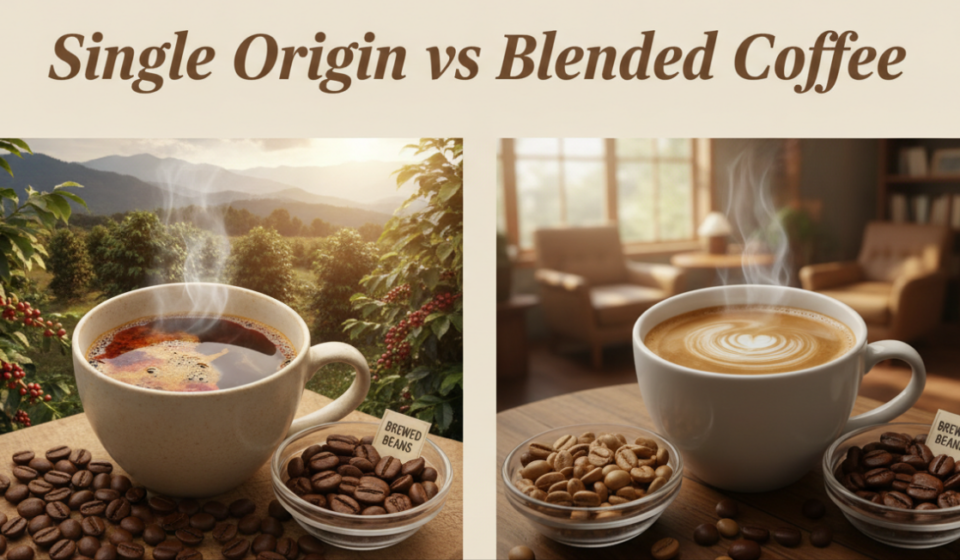
When exploring the world of coffee, the term ‘single origin’ often comes up, sparking curiosity among enthusiasts. Simply put, single origin coffee comes from one identifiable place. This could be as specific as a single plot on a farm or as broad as a region within a country.
When I talk about source specificity, I mean that these coffees are traceable back to a particular farm, cooperative, or estate. This traceability is something I deeply value. Single origin can refer to coffee from one specific lot within a farm, one farm itself, a cooperative representing several small farms, or even a single mill that processes beans from multiple local growers.
The concept of terroir plays a starring role in single origin coffee. Terroir encompasses the soil, climate, altitude, and weather that shape the beans’ flavor in ways that can’t be replicated elsewhere. This unique interaction with nature creates a distinct profile for each batch.
Another fascinating aspect is seasonality. Since these coffees come from a single harvest, they are available for a limited time. I find that this seasonality adds to their specialness. It’s exciting to experience the variations in flavor that occur from year to year, as weather patterns shift.
Single origin coffees will never taste exactly the same year after year. I cherish this variability as a reflection of nature’s influence. The flavor within a single origin bean tells a story of the plant’s life—the rainfall, soil fertilization, elevation, sunlight, and temperature all leave their mark, creating a rich narrative.
Additionally, traceability serves as a quality indicator. When I buy single origin coffee, I can often learn exactly where and how the beans were cultivated, processed, and even how much the farmers were paid. This transparency enhances my appreciation for each cup.
These coffees tend to be more daring, adventurous, and complex. The flavor notes can range from bright citrus to deep chocolate, depending on the place of origin. For me, single origin coffee is about exploration and discovery, offering a chance to taste a specific moment in time that you’ll never experience exactly the same way again.

What Is Blended Coffee?
Blended coffee offers a unique perspective on flavor by combining beans from different origins. This process is not merely about mixing; it’s an art form that allows roasters to create distinctive profiles that highlight the best attributes of each component.
Roasters typically blend coffees either before roasting or after roasting them separately. Each method provides different levels of control over the final flavor profile. The choice of blending technique can significantly impact the overall taste and consistency of the cup.
Definition and Common Blending Practices
A coffee blend combines beans from two or more different origins. The goal here isn’t uniformity; it’s balance. By blending beans with varying strengths, roasters can craft a cup that is smoother, more complex, or consistently enjoyable.
For example, a roaster may aim to create a dark roast with flavor notes of baking spices and chocolate. They would select several single-origin coffees that, when mixed, achieve that specific profile. If one component runs out, they can easily swap it for another similar coffee, ensuring the blend remains available year-round.
Purpose of Blending: Consistency and Flavor Profiles
The primary purpose of blending is consistency. When I choose a blend, I can expect it to taste relatively the same every time I brew it. This reliability is something many coffee drinkers genuinely value.
To illustrate, consider a blend that combines Brazilian coffee, known for its full body and low acidity, with Colombian coffee, which offers bright acidity but less body. This combination results in a beautifully balanced medium-body, medium-acidity cup that many enjoy.
Examples of Popular Coffee Blends and Their Characteristics
Creative blends are becoming increasingly popular. For instance, pairing a washed Ethiopian coffee with a natural-process Ethiopian coffee can yield surprising and delightful flavor combinations. These blends are designed for harmony and balance, often smoothing out the extremes found in single-origin selections.
Many roasters offer signature blends, such as house blends, espresso blends, and dark roast blends, each with its unique personality. I’ve come to appreciate these blends as reliable companions, providing a consistently delicious cup without any surprises. There’s real craftsmanship behind that reliability.
| Blend Type | Flavor Profile | Characteristics |
|---|---|---|
| House Blend | Balanced, smooth | Everyday drinker, approachable |
| Espresso Blend | Rich, bold | Designed for espresso machines, full-bodied |
| Dark Roast Blend | Chocolate, spices | Robust flavor, less acidity |

Single Origin vs Blended Coffee: Understanding the Key Differences
Understanding the nuances between distinct coffee styles can elevate your daily brew. Each type brings its own charm, and knowing what sets them apart can enhance your experience.
Flavor Clarity and Complexity
When I sip a single origin coffee, I notice distinct flavor notes that reflect its unique terroir. For instance, a bright citrus note might come from a Kenyan bean, while a berry sweetness could be present in Ethiopian selections. These flavors tell a story of the place where the beans are grown.
In contrast, blends are crafted for harmony. They often smooth out the extremes found in single origins, resulting in a more familiar and predictable cup. This balance appeals to a wider range of palates, making blends a popular choice among coffee drinkers.
Consistency and Availability Year-Round
Another significant difference lies in consistency. Single origin coffees can vary from harvest to harvest, which I find exciting but can be frustrating for those who prefer a stable flavor profile. Each season brings its own unique characteristics.
On the other hand, blends maintain a signature profile throughout the year. Roasters can swap in similar beans from different origins as seasons change, ensuring that the flavor remains consistent. This reliability is a huge advantage for many coffee lovers.
How Roasting Approaches Differ
The roasting process also varies between these two types. With single origin coffees, the roaster’s goal is to highlight the inherent flavors of the beans without adding anything extra. This delicate approach requires skill and precision.
Conversely, roasters of blends often roast different components separately to different levels before combining them. This method allows for greater control over the final body, acidity, and flavor balance, creating a well-rounded cup.
Impact on Brewing and Drink Types
Brewing methods can significantly impact the flavor experience. I’ve found that single origin coffees shine in manual brewing methods like pour-overs, where their subtle flavors can be fully appreciated.
Blends, however, tend to perform beautifully in espresso drinks and with milk. They offer a sweetness and body that stand up well to cream and sugar, while many single origin coffees can get lost or taste odd when combined with milk.
Ultimately, neither type is inherently superior. Single origin offers clarity and adventure, while blends provide balance and reliability. I often keep both in my rotation, depending on my mood and brewing method.
How to Choose Between Single Origin and Blended Coffee
When it comes to selecting your perfect cup, understanding your preferences can make all the difference. The choice between single origin and blends often depends on what you seek in your coffee experience. Let’s explore how to navigate this decision.
Consider Your Taste Preferences and Exploration Goals
First, ask yourself: what am I looking for in my cup right now? If you crave exploration and want to taste something new, single origin coffee is your best bet. These selections often offer daring, adventurous, and complex flavor notes that can surprise your palate.
On the other hand, if you value reliability and want a consistently delicious cup, a well-crafted blend might be your best friend. There’s absolutely nothing wrong with preferring the familiar taste of a blend that you can enjoy every morning.
Matching Coffee Type to Brewing Methods
In my experience, single origin coffees shine in manual brewing methods like pour-overs and French presses. These methods allow subtle flavors to fully express themselves. If you love espresso or regularly add milk and sugar, blends typically perform better. They are designed with the body and sweetness to complement milk and flavorings.
Balancing Budget, Convenience, and Coffee Experience
When it comes to budget, both single origin and blends span a range of price points. Generally, you get what you pay for. Sourcing from quality-focused roasters ensures the beans have been well cared for.
Blends also offer year-round availability and consistent taste, which is perfect for those who prefer a subscription without the hassle. Single origin coffees require more attention, as offerings change with harvest seasons.
Consider keeping both types in your rotation. Maybe a blend for your weekday routine and a single origin for leisurely weekend brewing when you have time to savor the nuances.
Ultimately, the best coffee is the one you enjoy drinking. I’ve found that experimenting with both single origin and blends from trusted roasters is the most rewarding way to develop your palate.
I hope this guide gives you the confidence to explore. Some of my most memorable coffee experiences have come from stepping outside my comfort zone and trying a single origin from a region I had never explored before.
| Aspect | Single Origin | Blends |
|---|---|---|
| Flavor | Daring, complex | Balanced, familiar |
| Brewing Methods | Manual methods shine | Great for espresso |
| Price | Varies widely | Often more consistent |
| Availability | Seasonal | Year-round |
Conclusion
In the vast universe of flavors, the choice between different coffee styles can feel overwhelming. Yet, there’s no universal winner—both single origin and blended varieties have earned their place in the coffee world for good reasons.
Single origin coffee offers a glimpse into a specific place and moment in time, delivering clarity and adventure with each unique harvest. In contrast, blends provide consistency and balance, crafted with care by skilled roasters who create harmonious flavor profiles.
The quality of your experience hinges on sourcing from experienced roasters who prioritize quality. Well-cared-for beans—whether from a single origin or a blend—will always taste better. I encourage you to find trusted roasters and explore their offerings with an open mind.
Remember, the beauty of coffee lies in its diversity. Whether you prefer the clarity of a single origin or the balance of a blend, both can expand your palate and deepen your appreciation for what’s in your cup. Start your exploration today and discover the joy that awaits!